

Introduction
If you feel stuck with speaking, writing, or test scores, the quickest win usually comes from tuning two systems: grammar and vocabulary. In 2025’s mobile-first learning world, you can diagnose where you’re slipping, apply targeted fixes, and track progress without expensive courses. This troubleshooting guide shows you what each area actually covers, how they interact, and which steps deliver the biggest benefits for clarity, confidence, and results. To get started, bookmark this guide and use it alongside your daily drills on your phone. If you need a single reference you can revisit, here’s a reliable anchor on grammar and vocabulary you can keep in your study toolkit.
Grammar vs. Vocabulary: What’s the Difference?
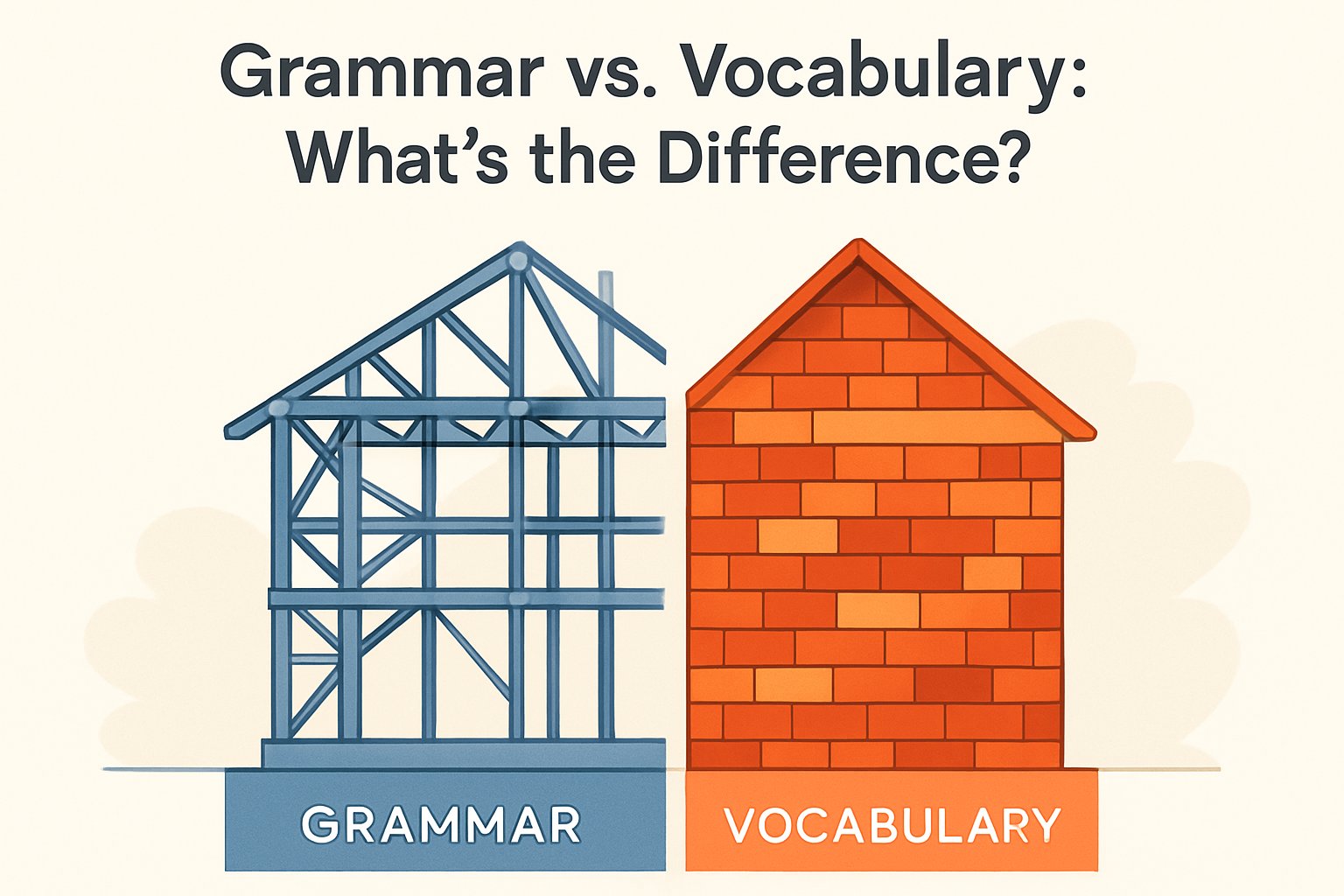
Grammar is the system that organizes language, while vocabulary is the stock of words you draw from. If grammar is the architecture, vocabulary is the building material. When you diagnose problems, ask whether your message is unclear because of missing or misused words (vocabulary) or because the sentence structure and forms are off (grammar). Understanding the difference helps you choose the right fix—rule practice or word learning—so you improve faster with less effort and cost. To better illustrate these distinctions, consider their core focuses and common issues. Grammar primarily addresses how to arrange words and use correct forms, often leading to symptoms like wrong tenses, awkward word order, or subject-verb disagreement. Quick fixes for grammar include short rule reviews, pattern drills, and example-based corrections. In contrast, vocabulary focuses on which words express the exact meaning, with typical symptoms such as vague wording, repetition, or misunderstandings of nuance. Effective vocabulary fixes involve targeted word lists, spaced repetition, and collocation practice.
Example Sentences Using the Word Grammar
You improved your grammar by practicing past vs. present perfect with short, timed drills. When your emails felt unclear, a quick grammar check on subject–verb agreement made them concise and professional. If a sentence sounds off, you can often fix it by testing different grammar patterns until the meaning snaps into place. Mastering these grammar and vocabulary elements can significantly enhance your overall language proficiency.
Example Sentences Using the Word Vocabulary
Your vocabulary grew faster once you grouped words by topic and practiced them in mini-stories. Using richer vocabulary helped you replace generic words like “thing” and “do” with precise verbs and nouns. When you learned collocations, your vocabulary felt more natural and your phrases sounded fluent. Incorporating vocabulary building techniques consistently leads to more expressive and confident communication.
What is Grammar?
Grammar is the rule set that guides how words change form and combine to create meaning. It includes word order, verb tenses, agreement, prepositions, articles, and punctuation. When your grammar is solid, you can turn ideas into clear, accurate sentences that readers or listeners understand the first time. Building a strong foundation in grammar enhances overall language skills and prevents common misunderstandings.
Definition of Grammar
Grammar is the system that controls how you structure sentences so they are logical and coherent. It covers both the forms of words (like verb endings) and the relationships between words (like order and agreement). With a reliable grammar framework, your message is easier to decode and less likely to be misread. This foundational aspect of language ensures that your ideas are conveyed precisely and effectively in any context.
Key Components of Grammar
Grammar includes morphology, which deals with word forms such as plural endings or tense markers. It also includes syntax, which is how you arrange words and phrases into sentences that flow. Beyond that, you manage agreement, tense and aspect, articles and determiners, prepositions, and punctuation, each of which prevents ambiguity and improves precision.
In practical terms, grammar helps you decide where to place adverbs, how to maintain consistent tense, and how to avoid run-on sentences. When you troubleshoot, focus on one pattern at a time—like using present perfect for experiences—to build accuracy without overwhelming yourself. These components work together to create polished and professional communication.
Importance in Language
Strong grammar protects your meaning under pressure—during interviews, exams, or fast-paced chats. It also saves time because readers don’t need to guess what you meant. For learners, grammar patterns are efficient: once you master a pattern, you can apply it to dozens of sentences, which multiplies your output with minimal cost. Ultimately, investing in grammar leads to greater confidence and better results in both personal and professional settings.
What is Vocabulary?
Vocabulary is the set of words and phrases you know and can use effectively. It covers everyday words, academic and technical terms, idioms, and collocations. A wider vocabulary lets you be accurate, nuanced, and concise, which reduces confusion and boosts your confidence when you communicate. Effective vocabulary building is essential for advanced language mastery.
Definition of Vocabulary
Vocabulary includes all the words you recognize (receptive) and the words you can actively produce (productive). Productive vocabulary matters most for speaking and writing because it determines how precisely you can express ideas. The right word often shortens your sentence and strengthens your point. Understanding this distinction helps in targeting your learning efforts more efficiently.
Types of Vocabulary
Receptive vocabulary covers words you understand when you read or listen, while productive vocabulary covers what you can say or write. Topic-based vocabulary focuses on specific domains like business emails, travel, or research. You also have collocations, which are word pairs or groups that occur together naturally, such as “make a decision” or “highly effective,” and these make your language sound fluent. Exploring these types can tailor your vocabulary building to your specific needs.
Role in Communication
Vocabulary determines how precise and persuasive your message can be. When you lack the right word, you either over-explain or accept inaccuracy, which weakens your impact. Building vocabulary around your real tasks—like reports or sales calls—delivers the fastest improvement for everyday performance. This approach ensures that your communication is both effective and engaging.
How Are Grammar and Vocabulary Related?
Grammar and vocabulary are interdependent: words bring meaning, while grammar structures that meaning so others can follow it. If one is weak, the other cannot fully compensate. In practice, you get the best results when you improve both in small, connected steps. This synergy is key to achieving fluency in any language.
Interdependence in Language Use
Grammar patterns often demand specific vocabulary choices, especially with prepositions and phrasal verbs. Meanwhile, vocabulary items frequently come with preferred grammar frames, such as “recommend doing” or “interested in.” When you learn them together, you avoid fossilized mistakes and your sentences sound natural. This integrated approach accelerates overall language improvement.
Examples of Integration
Consider “I have worked here since 2022,” which combines the present perfect grammar pattern with a time-expression vocabulary choice. Or take “She made a compelling argument,” where the collocation “make an argument” pairs with adjective–noun choices. Even simple requests like “Could you please send the file?” use modal grammar plus service-oriented vocabulary to create polite tone. These examples highlight how grammar and vocabulary work hand in hand.
Is It Better to Learn Vocabulary or Grammar First?
There’s no one-size-fits-all order, but the fastest route is usually a blended approach. If you’re brand new, core survival vocabulary helps you communicate basics, while a few key grammar patterns keep your sentences stable. If you can already speak, targeted grammar fixes often unlock a big jump in clarity. Balancing both from the start prevents common learning pitfalls.
Pros and Cons of Each Approach
Learning vocabulary first gives you immediate communicative power, so you can express needs and understand common messages. The downside is that without grammar, your sentences may be unclear or time-consuming to interpret. Learning grammar first builds a strong framework, but without words, you’ll struggle to say anything useful. Weighing these factors helps in choosing the right starting point for your goals.
Balanced Learning Strategies
A practical plan is to mix 10–15 high-value words per day with a single grammar focus per week. You can also learn vocabulary in grammar frames—such as practicing new verbs directly with the tense you’re working on. This balance prevents overwhelm, improves fluency, and keeps your study time efficient and affordable. Implementing this strategy leads to sustainable progress over time.
How to Improve Your Grammar and Vocabulary
Use short, consistent routines designed for mobile. A 20–30 minute daily plan beats a long weekly session because it supports memory and fits into commutes or breaks. Keep costs low by combining free resources with a small monthly budget (for example, RM20–RM50) for premium features like offline mode or practice tests as needed. This approach makes improvement accessible and practical for busy learners.
Effective Grammar Improvement Techniques
Start with pattern-based practice: pick one tense, one agreement rule, or one punctuation skill, and drill it for a week. Use minimal pairs—two nearly identical sentences with a single changed element—to spot differences quickly and avoid confusion. Turn mistakes into micro-lessons by rewriting your own sentences three ways: incorrect, corrected, and improved for style.
Record yourself speaking for one minute on your phone, then transcribe and correct the grammar. The act of hearing and seeing your errors creates a feedback loop that accelerates learning. For mobile-first convenience, keep a small “rule deck” with your top ten personal errors, and review it daily while waiting in line. These techniques ensure steady and measurable progress in grammar proficiency.
Vocabulary Building Methods
Adopt spaced repetition to convert new words into long-term memory, but limit daily additions so you can actually use them. Learn words in families and collocations—”analyse, analysis, analytical” or “meet a deadline”—to boost productive use. Always write one original sentence per new item; using the word immediately in your context cements its meaning.
Curate topic sets aligned with your goals, such as customer support phrases, research descriptors, or presentation verbs. Rotate input sources—short articles, captions, and podcasts—to encounter words across contexts, which strengthens recall. For affordability, lean on free mobile apps and public-domain materials, and allocate RM10–RM30 for a focused add-on only if it clearly improves your productivity. Consistent application of these methods enhances vocabulary building effectively.
Combined Practice Tips
Use “grammar frames” to deploy new vocabulary: for example, practice the present perfect by describing recent achievements with your target words. Build micro-dialogues that pair a grammar focus with a topic list, and voice-record them to check fluency and accuracy. Convert corrections into a “personal phrasebook” that includes the fixed sentence and a reason it works.
Track progress weekly: measure words correctly used in context and grammar accuracy in a 100-word writing sample. If accuracy dips below your target, reduce new word intake and strengthen the grammar frame for a few days. Keep your toolkit light, mobile, and affordable so it fits your routine and budget, and start now with a five-day cycle you can repeat for steady gains. This integrated practice fosters comprehensive improvement in both areas.
FAQs
Frequently asked questions about grammar and vocabulary can help clarify common doubts and provide practical guidance. Addressing these queries ensures learners have the information needed to advance effectively. Below, you’ll find detailed answers to some of the most common concerns in mobile-first, affordable language learning.
How long does it take to see improvements in grammar and vocabulary?
Most learners notice clearer sentences and better recall within two to three weeks of daily 20–30 minute practice. Track one grammar focus per week and 10–15 new words per day to see measurable results. Consistency matters more than total hours, especially with mobile-first micro-sessions. Starting small builds momentum for long-term success.
Should I memorize grammar rules or learn by examples?
Use both: a brief rule gives you the map, and multiple examples teach you how to drive. Keep rules minimal and immediately apply them to your own sentences. When a rule feels abstract, collect three concrete examples and build from there. This method makes grammar more intuitive and applicable.
What’s a cost-effective daily routine on mobile?
Try 10 minutes of spaced repetition for vocabulary, 10 minutes of grammar drills, and a quick 5-minute speaking or writing task. Use free app tiers and invest RM10–RM30 monthly only if a feature materially improves your workflow. Set offline downloads to study without data costs. This routine maximizes efficiency on a budget.
How do I stop translating in my head?
Practice with short, familiar frames and high-frequency collocations so sentences form automatically. Shadow audio for one minute daily to link sounds and meaning directly. Over time, your brain builds direct pathways, which reduces translation lag. Persistent practice leads to more natural language processing.